How long does water damage drying take?
Typical times by material
- Carpet (pad replaced): 1–3 days
- Drywall: 2–4 days
- Framing inside walls: 3–5 days
- Hardwood floors: 5–14 days with floor-drying systems
- Concrete slab surface: several days to weeks, depending on saturation
- Plaster walls: often a week or more
What slows drying
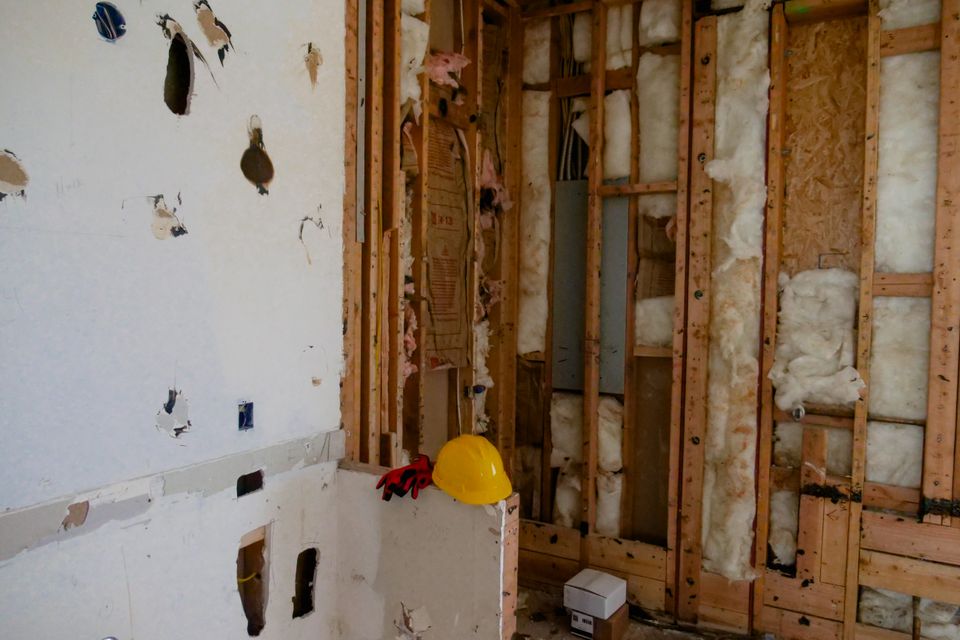
Water trapped behind cabinets, under tile or inside insulated walls dries slowly until it's exposed. Humidity matters too: on a humid DFW summer day, keeping the house closed and the AC running helps dehumidifiers work. In winter, the crew may add heat because warm air holds more moisture.
How dry is dry?
Crews measure unaffected materials in the same house to set a dry standard, then take readings in wet areas every day. The drying log shows those readings. When wet areas reach the standard, equipment comes out and repairs can start.
Don't rush repairs
Closing a wall or laying new flooring over damp material traps moisture and invites mold. Ask for the final readings before repairs begin.
Questions
Can I speed up drying?
Keep equipment running, keep doors to wet rooms open, keep the AC on, and don't move equipment. Opening windows on humid days can slow drying.
Why are there holes in my baseboards?
Small holes let air into wall cavities so framing and the back of drywall can dry without removing the whole wall.
This guide is general information for Texas homeowners, not legal, insurance or safety advice for your situation. Check your policy and follow local codes.